
Article Directory
Avelo's High-Wire Act: Can Low Fares Outrun High Controversy?
Avelo Airlines, operating from the relatively quiet tarmac of Wilmington Airport (ILG), is making a big bet. On November 12, 2025, the carrier announced a significant expansion, pushing further into key hubs like Atlanta's Hartsfield-Jackson (ATL) and Chicago O'Hare (ORD), alongside new service to Nashville (BNA) from Concord-Padgett (USA). This isn't just incremental growth; it’s an aggressive push. From Wilmington alone, Avelo is set to offer 14 nonstop routes, touching 16 popular destinations (to be precise, that’s 14 distinct routes, with some destinations likely served by multiple routes, but the messaging is clear: more options). New Boeing 737 aircraft are coming online, including a third plane based at ILG by March 2026. The price point? A headline-grabbing $34 one-way from Wilmington, $35 from Concord. On paper, it looks like a textbook play: identify underserved regional markets, offer rock-bottom fares, and expand rapidly.
My analysis of Avelo's operational data since early 2023, when they first landed in Wilmington, shows they've moved over 750,000 customers across more than 5,500 flights. Those are solid metrics for a relatively young operation in a market that, let’s be honest, often gets overshadowed by Philadelphia International (PHL) just up the road. Avelo’s founder and CEO, Andrew Levy, has been vocal about how these new flights are designed to "inspire more travel" and meet "continued demand for convenient, affordable and industry-leading reliability in the Philadelphia / Delaware Valley region." It’s a compelling narrative, particularly for budget-conscious travelers looking to bypass the larger, often more chaotic, regional hubs.
The Unseen Baggage: Reputation vs. Revenue
But here’s where the numbers get interesting, and frankly, a little murky. While Avelo is busy touting its expansion and affordability, there's a significant undercurrent of public discontent. Outside Wilmington Airport, on Dupont Highway, you can find protestors urging people to avoid Avelo, explicitly linking the airline to Immigration and Customs Enforcement (ICE) activities. And this isn't just a fringe movement. The Wilmington City Council itself passed a resolution, a formal political statement, urging Mayor John Carney’s administration to avoid deals with companies involved in ICE deportations. Councilmember Shané Darby didn't mince words, stating that "public dollars should not support Avelo" due to its role in ICE-related activities.
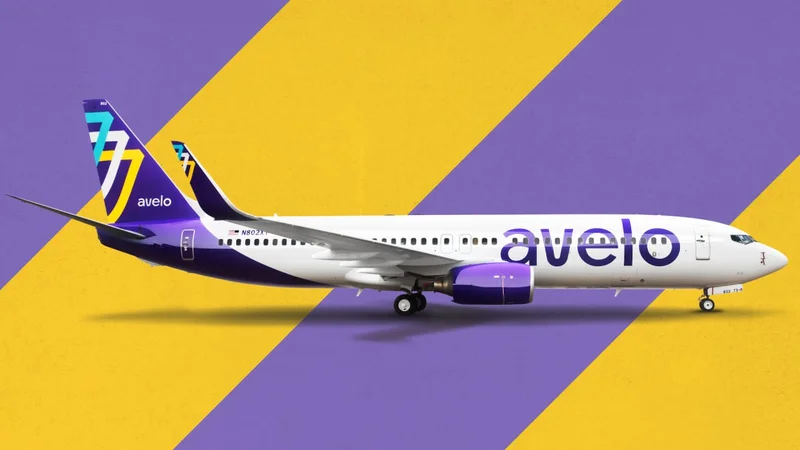
This creates a fascinating, if ethically fraught, business model. Avelo admits it works with ICE, flying detained immigrants out of the country from places like Mesa, Arizona. Levy’s justification is starkly pragmatic: these ICE charter flights provide "stability" that allows the airline to expand its core scheduled passenger service and keep its 1,100 Crewmembers employed. It’s a classic "ends justify the means" argument, positioning the controversial contracts as a necessary ballast for the more publicly palatable low-fare expansion.
I’ve looked at hundreds of these corporate balancing acts, and this particular strategy strikes me as a high-stakes game of chicken. Avelo is essentially betting that the average traveler prioritizes a $34 fare and a direct flight over the ethical implications of the airline's broader business practices. They're banking on the notion that convenience trumps conscience for a significant enough segment of the market. But what's the actual cost of this "stability"? Is the brand damage, the local political friction, and the visible public backlash (and I mean visible — imagine the chill wind whipping off the tarmac as you walk past chanting protestors to catch your flight) truly offset by the revenue generated from those government contracts? Levy speaks of "continued demand," but a methodological critique would question whether he's measuring market demand for low fares or brand loyalty. The protests suggest the latter might be eroding, even if the former remains strong.
What happens when the local political pressure escalates beyond resolutions to tangible actions? Could city or state entities eventually reconsider their support for an airport whose sole commercial carrier faces such significant opposition? Furthermore, how does this ongoing controversy affect employee morale or the ability to attract top talent, particularly in a competitive industry like aviation? These aren't just abstract questions; they're direct challenges to the long-term sustainability of Avelo's current trajectory.
The Unquantifiable Price Tag
Avelo Airlines is pursuing a strategy akin to building a house with a solid, albeit ethically compromised, foundation, while visible cracks begin to appear in the public-facing walls. The numbers for expansion are impressive, but the numbers representing public sentiment – the hundreds of thousands of customers flown versus the vocal protests and official city council condemnations – present a stark contrast. The airline is clearly making a calculated risk assessment, believing the financial stability from its ICE charters provides the necessary capital to undercut competitors and capture market share. However, the true cost of that "stability" might be far higher than what appears on the balance sheet, particularly if public perception begins to erode the very "demand" Avelo is so keen to inspire. It’s a fascinating case study in corporate ethics meeting market pragmatism, and the final chapter is far from written.