
Article Directory
Let's talk about a recipe. Not for your grandmother's famous chocolate chip cookies, but for the very fabric of our digital world: the semiconductor. For decades, making a better chip has been like perfecting that cookie recipe—a slow, painstaking process of trial, error, and immense human effort. You tweak the ingredients, adjust the oven temperature, and hope for a better batch next time. It’s a linear, methodical march of progress.
What Samsung and Nvidia just announced isn't a new recipe. It's a whole new kind of kitchen. A kitchen that thinks.
The news hit like a thunderclap: Samsung is building what it calls an "AI Megafactory," a facility powered by a staggering 50,000 Nvidia GPUs. This isn't just another headline about a blue chip company making a big purchase. We're witnessing a fundamental paradigm shift, a moment where the tool we created—artificial intelligence—is now being handed the blueprints to design and build its own brain. Imagine a world where the chocolate chip cookie recipe doesn't just get perfected; it starts rewriting itself in real-time, learning from every single cookie it bakes to create something impossibly delicious, batch after batch. That’s what’s happening here, but with the foundational technology that will define our century.
The Self-Improving Factory
So what does this "AI Megafactory" actually do? Let’s break it down. Samsung, a giant in memory and mobile devices, is taking 50,000 of Nvidia’s most powerful processors and pointing them inward, at its own manufacturing process. They're plugging these GPUs directly into their chipmaking lithography platform—in simpler terms, that’s the incredibly precise process of 'printing' circuits onto silicon wafers—and using Nvidia's simulation software, Omniverse, to create a perfect digital twin of the entire factory.
This is where the magic happens. Before, improving a chip design was a physical, time-consuming process. Now, Samsung can run millions of simulations in a virtual environment, testing new designs and optimizing production lines before a single piece of hardware is touched. Nvidia claims this partnership will result in a 20-fold performance improvement for Samsung, which is just an absolutely staggering number, it means the feedback loop between designing a better chip, testing it, and producing it collapses from months or years down to weeks, days, maybe even hours.
When I first read about this, I honestly just leaned back in my chair, a slow grin spreading across my face. This is it. This is the kind of breakthrough that reminds me why I got into this field in the first place. We're not just accelerating progress; we're creating an engine for exponential progress. The snake is officially eating its own tail, and I, for one, am thrilled to see how big it gets.
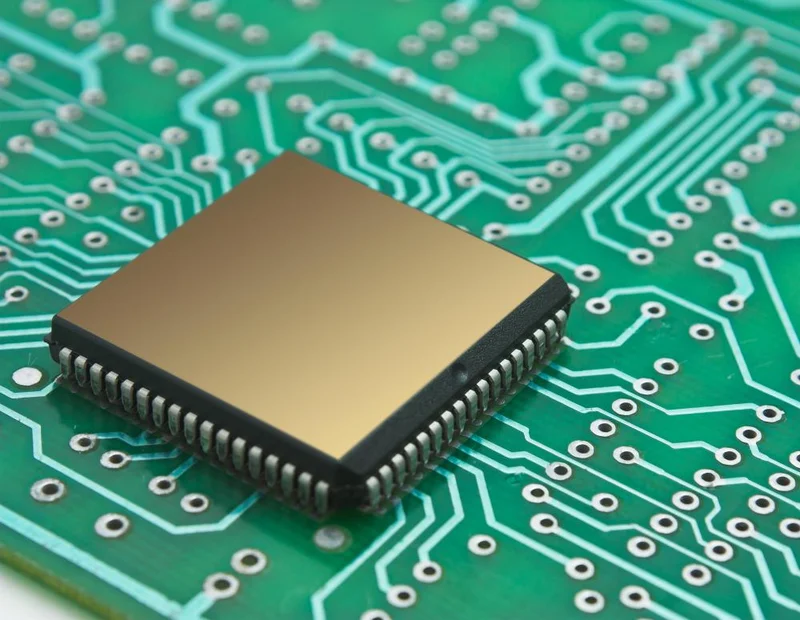
This isn't a one-way street, either. It’s a deeply symbiotic relationship. Samsung is not only a customer but also a crucial supplier for Nvidia, making the high-bandwidth memory (HBM) that Nvidia’s AI accelerators desperately need. They're now working together to specifically tailor Samsung's next-generation HBM4 memory for Nvidia's future AI chips. It’s like the baker of the chocolate and the maker of the cookie dough collaborating to invent something entirely new. What happens when the system designing the chips has direct input from the system that creates its memory? What new architectures become possible when that feedback loop is instantaneous?
A Handshake Over Soju, A Vision for the World
If you want to understand the gravity of this moment, look past the press releases and market cap announcements—Nvidia just became the first company to hit $5 trillion, by the way. Look at the human element. Shortly after Nvidia CEO Jensen Huang’s keynote in D.C., he was spotted in Seoul, sharing fried chicken and soju with Samsung Chairman Lee Jae-yong.
You can almost feel the energy in that room—the clinking of glasses, the murmur of two industry titans not just signing a deal, but forging an alliance. This isn't a sterile transaction; it's a shared vision, a handshake that solidifies a future where Korean industrial might and American AI innovation merge. And it’s not just Samsung. Other Korean powerhouses like SK Group and Hyundai are deploying similar arsenals of GPUs. This is a national-level commitment to leading the AI revolution.
This reminds me of the birth of the automotive assembly line. Henry Ford didn't just invent a way to build cars faster; he invented a new system for manufacturing that changed the world, enabling a level of scale and accessibility previously unimaginable. This AI Megafactory is our generation's assembly line, but with one profound difference: this assembly line improves itself. It learns. It evolves.
Of course, a self-improving factory brings with it immense responsibility. The power to create intelligent systems that can replicate and enhance themselves is not something to be taken lightly. We have to be the thoughtful architects of this new world, ensuring that the goals we program into these systems are aligned with human flourishing. The question is no longer can we do this, but what guardrails must we build as we proceed?
But the potential is breathtaking. This isn't just about making better processors for our phones or more efficient robots. This is about creating a tool that can help us solve humanity's biggest challenges. Imagine AI-designed materials that can capture carbon from the atmosphere, or AI-developed proteins that can cure genetic diseases. When you give your smartest tool the ability to improve itself, you’re not just taking one step forward; you’re unlocking a cascade of future breakthroughs. We’re handing the AI the keys to its own kingdom, and in doing so, we might just be unlocking the door to ours.
The Recipe is Now Writing Itself
Forget everything you think you know about manufacturing and progress. We've spent a century perfecting the art of building things. Now, we're building things that build themselves, and do it better every single time. This Samsung-Nvidia partnership isn't just another deal. It's the closing of a loop, the spark of a recursive revolution. The factory of the future isn't just automated; it's intelligent. It's creative. And it’s just getting started.