
Article Directory
This Isn't Just a New Flight—It's a Bridge Between America's Future and Its Past
On the surface, it’s just another press release, another line on a departure board. When you see headlines like Delta Adds New Flight from Seattle to Mural Capital of the World, it’s easy to file it away as simple logistics: Delta is launching a new daily nonstop flight from Seattle to Philadelphia on May 7, 2026. A convenient route for business travelers, a new option for tourists. But I’m telling you, to see it that way is to miss the point entirely. This isn't just about moving people from Point A to Point B. This is about building a physical artery between two of America’s most vital, and profoundly different, centers of gravity.
What we're witnessing is the deliberate construction of a bridge—not of steel and concrete, but of opportunity and intellectual friction. It’s about creating network density, and in simpler terms, that just means making it easier for brilliant people with completely different worldviews to bump into each other. Think about it: Seattle, our gleaming hub of cloud computing, AI development, and forward-facing disruption. And Philadelphia, the bedrock of American democracy, a city of historical grit that’s also a quiet powerhouse in biotech, pharmaceuticals, and medical research. This new route is a conduit, a 2,400-mile-long pipeline designed to shuttle ideas, capital, and talent back and forth at 500 miles per hour—and that kind of acceleration in human connection is where genuine, unpredictable innovation is born.
When I first read that Amy Martin, Delta’s Vice President of Network Planning, confirmed this route was a "top-requested destination" from their Seattle corporate customers, I honestly just sat back in my chair and smiled. It’s tangible proof that this isn't some abstract theory of mine. The demand for this kind of cross-pollination, this intellectual arbitrage, is real. It’s a powerful economic force bubbling up from the people on the ground who are actually building the future. They know, instinctively, that their next breakthrough might not come from the colleague in the next cubicle, but from a conversation with someone who thinks in a completely different language of innovation.
The Cultural Collision We Desperately Need
Let’s be real. These two cities couldn’t feel more different. Imagine stepping off a plane from the misty, evergreen-scented air of Seattle, where conversations are dominated by server uptime and Series B funding, and walking onto the hot, historic cobblestones of Philly’s Queen Village. You trade the sleek, glass-and-steel aesthetic for red-brick row houses. You trade polite, reserved efficiency for a city that calls water "wooder" and has a word, "jawn," that can mean literally anything.
This isn't a criticism; it's a celebration. Philadelphia has a texture, a soul forged in history and hard-won pride. It’s a city of world-class museums and legendary cheesesteak rivalries, of revolutionary history and a fanatical sports culture that feels primal. It’s proudly, unapologetically itself. This is the city that gave us the Declaration of Independence, but it’s also the city where you can get a world-class meal at a BYOB in jeans and sneakers. That blend of high-minded ideals and grounded, everyday authenticity is a powerful creative fuel.
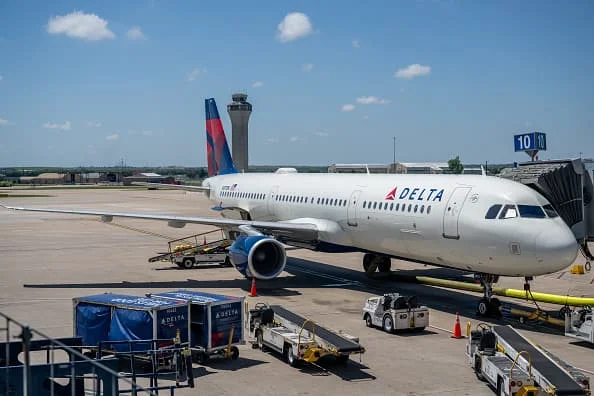
Now, what happens when you pour that fuel into the engine of Seattle’s relentless technological optimism? What new perspective does a software engineer gain after spending a week navigating a city that measures its history in centuries, not fiscal quarters? And more importantly, what happens when a bio-engineer from Philly has a three-hour, wi-fi-free conversation with a cloud architect from Seattle on that A321neo? What new "jawn" gets invented then? These are the questions that truly excite me. This is about more than just Delta competing with American and Alaska Airlines on a popular route; it’s about creating the conditions for happy accidents, for the kind of unexpected fusion that moves us all forward.
This reminds me of the moment the first transcontinental telegraph lines were completed. The news wasn't just that a message could get from New York to San Francisco in minutes instead of weeks. The real breakthrough was the kind of information that could now flow—the rapid exchange of market data, personal news, and complex ideas that collapsed the nation's perceived size and fundamentally rewired its economy and culture. We’re doing the same thing today, but instead of copper wires, we’re using flight paths. While other carriers like united airlines focus on their own global strategies, Delta's move here feels surgically precise—a targeted investment in connecting two specific, potent nodes of the American innovation network. It’s a quiet, brilliant move that understands the future isn't just about digital networks, but about strengthening the human ones, too.
The Shortest Distance Between Two Ideas
Look, it’s easy to be cynical about air travel—to see it as a necessary hassle of shrinking seats and TSA lines. But I choose to see the magic in it. Every flight path is a thread weaving our world closer together, and this new one from Delta feels particularly significant. It’s a bet on the power of collision. It’s a recognition that the next great leap forward might not come from a single, isolated genius, but from the friction generated when the city of Benjamin Franklin shakes hands with the city of Bill Gates. This isn't just a new route on a map; it's a vital new current in the flow of American ingenuity.