Article Directory
The Digital Whisper: Decoding the Market's True Obsessions
Alright, let's cut through the noise for a minute. When you look at the raw data—and I mean really look at it, not just skim the headlines—sometimes the most telling insights come from what isn't there, or from the periphery. We don't have a grand corporate announcement or a market-shaking event to dissect this time. No earnings call bombshell, no unexpected merger. Instead, what we've got is a sprawling, almost subconscious ledger of public and investor curiosity: a list of trending search queries. Think of it as a digital Ouija board, giving us glimpses into the collective market psyche.
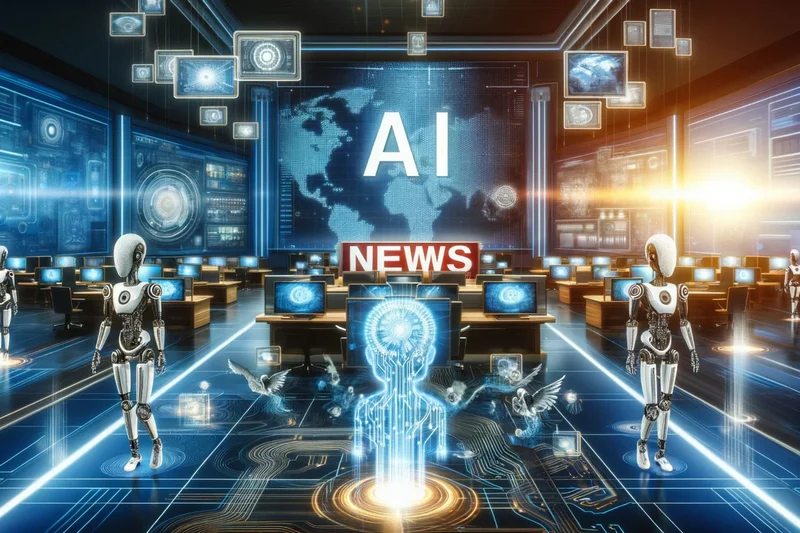
My analysis of these related searches points to a stark, almost singular fixation: Artificial Intelligence. It's not just a trend; it's the gravitational center of today’s digital discourse. Queries like "google ai news," "openai news today," "nvidia news," and "microsoft ai news" aren't just idle curiosity; they represent a significant reallocation of mental bandwidth, and by extension, capital interest. This isn't surprising, of course, given the recent performance of companies like Nvidia (whose market cap has soared past, what, $2 trillion now? To be more exact, it recently touched $3 trillion before a slight pull-back). But the sheer dominance of AI-related terms, overshadowing almost everything else, suggests something deeper than mere enthusiasm. It's an almost frantic search for the next edge, the next exponential leap. This is the part of the report that I find genuinely puzzling: are we in a sustainable growth phase, or is this a feedback loop of hype fueling further searches, which then fuel more hype?
The AI Juggernaut and Its Echoes
The concentration of AI-centric searches isn't just about the technology itself; it's about the players. Google, OpenAI, Microsoft, Apple, and Nvidia are the titans everyone's watching. These aren't just companies; they're the architects of the new digital economy, and their every move, every patent, every whisper of a new model, sends ripples through the market. The volume around "apple ai news," for instance, shows a clear anticipation, almost an impatience, for Apple to articulate its definitive strategy in this arena. The market, it seems, is holding its breath, waiting for the iPhone maker to fully commit, to lay its cards on the table. And why wouldn't they? Apple's entry could either validate or significantly disrupt the current pecking order, depending on its approach. It's a high-stakes poker game, and everyone's trying to peek at the dealer's hand.
Beyond the immediate AI frenzy, the secondary layer of search interest reveals a more grounded, yet equally pressing, set of concerns. We see a steady hum around "business news today," "health news today," and "travel news today," which are perennial, foundational interests. But then there are the specific macroeconomic indicators: "ecb news today," "bank of japan news today," "us politics news today," and "opec news today." This isn't just general curiosity; it's the undercurrent of anxiety that shadows the high-flying tech narrative. Investors, or even just the general public, are clearly trying to contextualize the AI boom within a broader, often volatile, global economic landscape. They're asking: how will central bank policies impact these valuations? Will energy markets or geopolitical shifts derail this technological ascent? It’s like watching a rocket launch while keeping one eye on the weather forecast for a hurricane (a parenthetical clarification: a category 5 hurricane, not just a summer shower). The data suggests that while AI holds our gaze, the macroeconomic levers still tug at our collective stomach.
Methodological Musings and What's Next
Now, let's talk methodology for a second. Interpreting search queries as a proxy for market sentiment is useful, but it's not without its caveats. These aren't direct investment signals; they're reflections of attention. And attention, as we know, can be fleeting, influenced by media cycles and social algorithms as much as by fundamental shifts. The fact sheet provides "Related Searches," which implies a certain degree of algorithmic curation, not necessarily a raw, unfiltered dump of every single query. So, while we can infer trends, we must acknowledge that this "data set" is already partially processed. It’s like trying to gauge public opinion from social media trends; you get a snapshot, but it's often filtered through an echo chamber.
What does this digital tea-leaf reading tell us about what’s coming? If the current patterns hold, we're likely to see continued, intense scrutiny on the AI sector. Every major announcement, every partnership, every benchmark will be amplified. I expect the "google ai news" and "openai news" cycles to remain robust. The market is desperate for clarity on who the long-term winners will be, and more importantly, how their dominance will translate into tangible, defensible earnings beyond the current speculative fervor. Will the "eu ai act news" or "japan travel news today" (though seemingly disparate) impact the global competitive landscape for AI innovation? It's a valid question, as regulatory frameworks and international talent pools will undoubtedly shape future development. The market isn't just looking for good news; it's looking for signals of sustainable advantage, a moat in a rapidly shifting technological sea. The absence of a clear "ending" in the provided data isn't a void; it's an invitation to anticipate the next chapter, guided by the collective digital pulse.
The Algorithm's Oracle: A Glimpse into Tomorrow's Bets
The data, thin as it is in terms of explicit events, paints a vivid picture of market priorities: AI is the undisputed heavyweight champion, with macroeconomics playing the nervous undercard. Anyone not deeply immersed in understanding the implications of "nvidia ai news" or "openai news today" is already behind. This isn't just about technology anymore; it's about the fundamental re-wiring of industries, and the collective digital search patterns are our best real-time indicator of where the smart money—and indeed, the smart attention—is placing its bets.