Article Directory
When the government designs a system, it’s not just writing rules; it’s writing code for society. The best systems are elegant, simple, and built on a foundation of trust. They create positive feedback loops that strengthen the very fabric of our communities. The Public Service Loan Forgiveness program, or PSLF, was always one of those systems.
The premise was beautiful in its simplicity. Public Service Loan Forgiveness—basically, a social contract that says if you dedicate a decade of your life to a demanding, often underpaid, but crucial job like nursing, teaching, or firefighting, we, as a society, will help you by forgiving the remainder of your student debt. It’s a system designed to incentivize service, to channel talent where it’s needed most. It’s a promise. But what happens when someone injects a virus into that code?
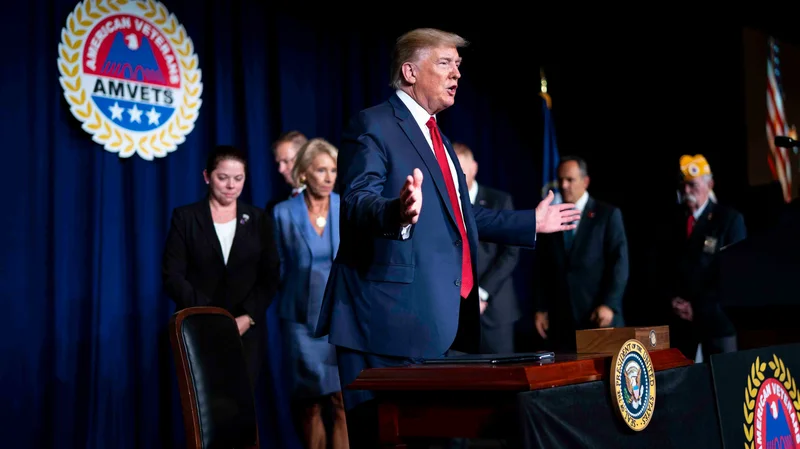
That’s what we’re watching unfold right now. The new regulations for PSLF, which come as the Trump administration drastically alters student debt relief, aren’t just a tweak or a reform. They are a fundamental corruption of the system’s core purpose. When I first read the text of this new regulation, I honestly felt a chill. It wasn't the legalese; it was the weaponization of ambiguity, a tactic designed not to clarify but to control. The new rule would deny loan forgiveness to people whose employers engage in activities with a "substantial illegal purpose." On the surface, who could argue with that? But the devil, as always, is in the undefined details.
The Malicious Code of Ambiguity
The administration’s own examples of what might constitute an "illegal purpose" give the game away: providing support for undocumented immigrants, offering gender-affirming care to minors, or aiding and abetting "illegal discrimination." These aren't settled matters of criminal law; they are the most contentious, politically charged battlegrounds in modern America. This isn't about stopping crime. This is about using the massive, terrifying weight of student debt as a lever to enforce ideological conformity.
This creates a chilling effect that will cascade through our most vital institutions—a ripple of fear that will touch hospitals, social work agencies, and legal aid clinics, forcing them to constantly look over their shoulders, wondering if their mission to help the vulnerable will be reclassified as a "substantial illegal purpose" by a shifting political wind. Think about it. Is a doctor at a public hospital providing life-saving care to a trans teenager now working for an organization with an "illegal purpose"? Is a non-profit lawyer offering counsel to an asylum seeker "harboring illegal immigrants," as the undersecretary so crudely put it?
This is the kind of breakthrough that reminds me why I got into systems analysis in the first place—to see how a small change in the source code can corrupt the entire output. What does it do to the spirit of public service when the very definition of "service" is subject to the whims of whoever holds power in Washington? How can anyone dedicate their life to a cause when they know the promise made to them can be retroactively voided based on a political disagreement?
This isn't just bad policy; it's a catastrophic system failure by design. It’s like building a bridge with a hidden self-destruct mechanism that can be triggered by an anonymous phone call. It turns a system of encouragement into a system of intimidation.
A System Designed for Paralysis
The inclusion of an appeals process is little more than a fig leaf. It creates a bureaucratic labyrinth, forcing underfunded non-profits and public institutions to spend precious time and resources fighting the federal government to prove their own legitimacy. The goal isn’t efficiency or fairness; the goal is paralysis.
This whole maneuver feels like a throwback to a darker era. It reminds me of the loyalty oaths of the 20th century, where public servants were forced to prove their ideological purity to keep their jobs. We’re just seeing a 21st-century update, swapping the oath for the threat of a six-figure debt sentence. The statement from Education Undersecretary Nicholas Kent, claiming the program wasn’t meant to "subsidize organizations that violate the law," is a masterclass in misdirection. The real question isn't whether an organization is violating the law, but who gets to write the definitions of "violation" on the fly?
This is the core vulnerability. When you build a system on vague, politically motivated language, you haven't built a system at all. You've built a weapon. And weapons, by their very nature, invite conflict. The promise of a swift lawsuit from advocates like the National Student Legal Defense Network isn’t a surprise; it's the system's natural immune response to a foreign agent. It’s the antibodies rushing to fight the infection.
You have to ask yourself: what kind of society are we building when we punish our helpers? What does it say about our future when we tell our brightest and most compassionate young people that their desire to serve the public good comes with a political asterisk?
This Isn't an Ending, It's an Ignition Point
This isn't just a policy story buried in the back pages. This is a fundamental battle over the soul of public service. A system built on such a flawed, malicious premise is inherently unstable. It cannot last. The backlash, the legal challenges, the public outcry—these are not signs of a system breaking, but of a system trying to heal itself. This move, in its breathtaking cynicism, may have inadvertently reminded us all of just how precious that simple, elegant promise of PSLF truly was. It has clarified the stakes. Now, the question is how we, the users of this societal operating system, choose to respond. This isn't the final word; it’s the bug report that forces us all to finally debug the code.